Paradise and Pandemonium: A Jungian Take on Summer in SWFL
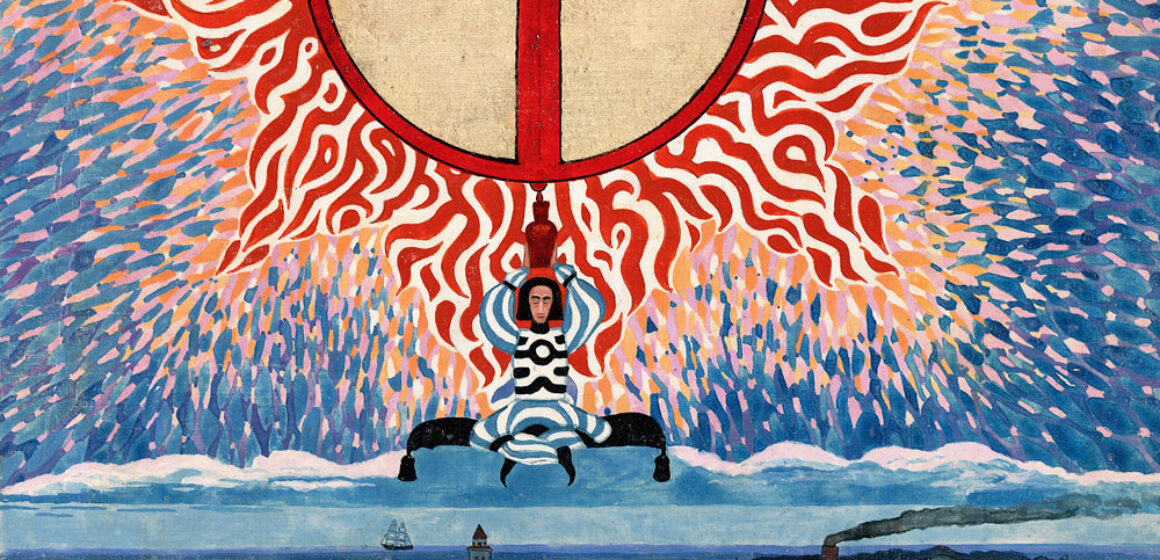
Summer begins in the Northern Hemisphere when the sun “stands still,” a phenomenon captured by the Latin roots sol (sun) and stice (stand still). Here in Southwest Florida, it feels summery for weeks before the summer solstice and remains steamy well past the fall equinox. Perhaps it’s more appropriate to measure the seasons here as “dry,” December through May, and “wet,” June through November. More ominously, we can divide the year between hurricane season and high season. As our planet tips toward its closest point in relation to the sun every June, we locals enjoy decreased traffic, bathtub temps in the Gulf, and more bites on the fishing line. Yet we are concurrently tuned in to the low-level hum, the background noise of our alertness for upcoming storms, which foretells anything from a day away from the daily grind to the loss of home, health, wealth, or certainty. In high season, the snowbirds return to enrich our economy, the hot sunny days shorten, and our weather-related anxieties calm. Thus, we live in a land of opposites: paradise and pandemonium.
Jung used the daily journey of the sun and the four seasons as metaphors for the phases of life. Morning/Spring is akin to youth, when we rise out of our infantile merger with the Great Mother of the Unconscious and develop an ego and persona that gets us out into life in a way that is, hopefully, adapted to the demands of the world. High Noon/Summer symbolizes mid-life, typically a time of high-level engagement with career, family, and social obligations. If we are fortunate, high noon also brings an increase in consciousness, often in the form of a mid-life crisis from which we become disillusioned with the mundane and turn toward the transpersonal. Setting Sun/Autumn & Winter point toward old age as a time for introspection and accepting who we are, have been, and will become as we sink back into the Unconscious via the Death Mother.
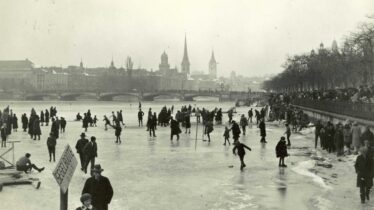
So, what would Dr. Jung think about the subtropical, bi-annual seasons of Southwest Florida? Psychologically, I think he would challenge us to look beyond the opposites of paradise vs. pandemonium. He might suggest that we suffer the summer banishment from the winter garden of paradise and accept the wet season’s dark aspects as the prima materia, the uncomfortable yet necessary dark skies and downpours that make a dry and temperate winter possible. In alchemy, the prima materia is the undifferentiated, chaotic, and raw material from which something new and whole emerges. Indeed, Jung himself observed: “The psychological rule says that when an inner situation is not made conscious, it happens outside as fate. That is to say, when the individual remains undivided and does not differentiate, the outside world must, of necessity, assume the split” (Jung, 1959, par. 126). For life lived only in the garden is infantile and unconscious, a wasting-away in Margaritaville, while weathering the storms of summer brings conscious awareness to the opposites of wet and dry, dark and light, good and evil that we must accept as conditions of being mere mortals in the sub-tropics. In sum, I imagine Dr. Jung would have much more to say on the subject than I can imagine. Yet, on the other hand, C.G. may have simply hopped an early spring flight back to Zurich where the lake stays bracingly cool, the mosquitoes are few, and the summer tourists sip Aperol Spritz by the shore.
-Dr. Annemarie Connor, CGJSS Board Member
Works Cited
Jung, C. G. (1959). Aion: Researches into the Phenomenology of the Self (R. F. C. Hull, Trans.). Princeton, NJ: Princeton University Press. (CW 9ii, par. 126).